Water Damage Restoration Timeline: What to Expect During Recovery

How long does it take to dry out water damage? Explore our detailed restoration timeline, from emergency extraction to structural drying and final repair.

24/7 Emergency Response
Service-Disabled Veteran-Owned Small Business (SDVOSB)
Colorado-Compliant Abatement

Water Damage Recovery

Understanding the Restoration Timeline

When water damage strikes your Denver-area home or business, the clock starts immediately. Mold can begin colonizing within 24 to 48 hours, structural materials absorb more moisture by the minute, and every delay compounds both the damage and the cost of recovery. ACES specializes in higher-complexity water losses that require contamination handling, selective demolition, and full structural rebuild — not commodity-level dry-and-go jobs. Understanding the restoration timeline helps you make informed decisions, coordinate with your insurance adjuster, and set realistic expectations for when your property will be fully restored.
Phase 1

The 24-72 Hour Window: Emergency Mitigation

The first hours after water intrusion are the most critical. ACES dispatches emergency crews to begin extraction immediately, stopping the damage cycle before mold and secondary saturation take hold. Our technicians assess every loss using the IICRC classification system — evaluating both the Class (volume and rate of evaporation) and the Category (contamination level) of the water source. This dual assessment directly determines the equipment plan, the safety protocols, and the projected drying schedule.

Emergency water extraction in progress

Immediate Response

Standing water is extracted using truck-mounted pumps and weighted extractors within the first visit. Every hour of standing water increases saturation depth in drywall, carpet pad, and subfloor materials, making rapid extraction the single most impactful step in the entire restoration process.

Equipment Deployment

Industrial air movers and LGR (Low Grain Refrigerant) dehumidifiers are positioned strategically based on the square footage, material type, and airflow dynamics of the affected area. ACES calculates equipment ratios to meet IICRC S500 drying standards from day one.

Loss Classification

The Class and Category assessment determines the full scope of work. A Category 1 clean-water pipe burst follows a different protocol than a Category 3 sewage backup or storm surge, which requires antimicrobial treatment, porous material removal, and containment barriers.

ACES Approach

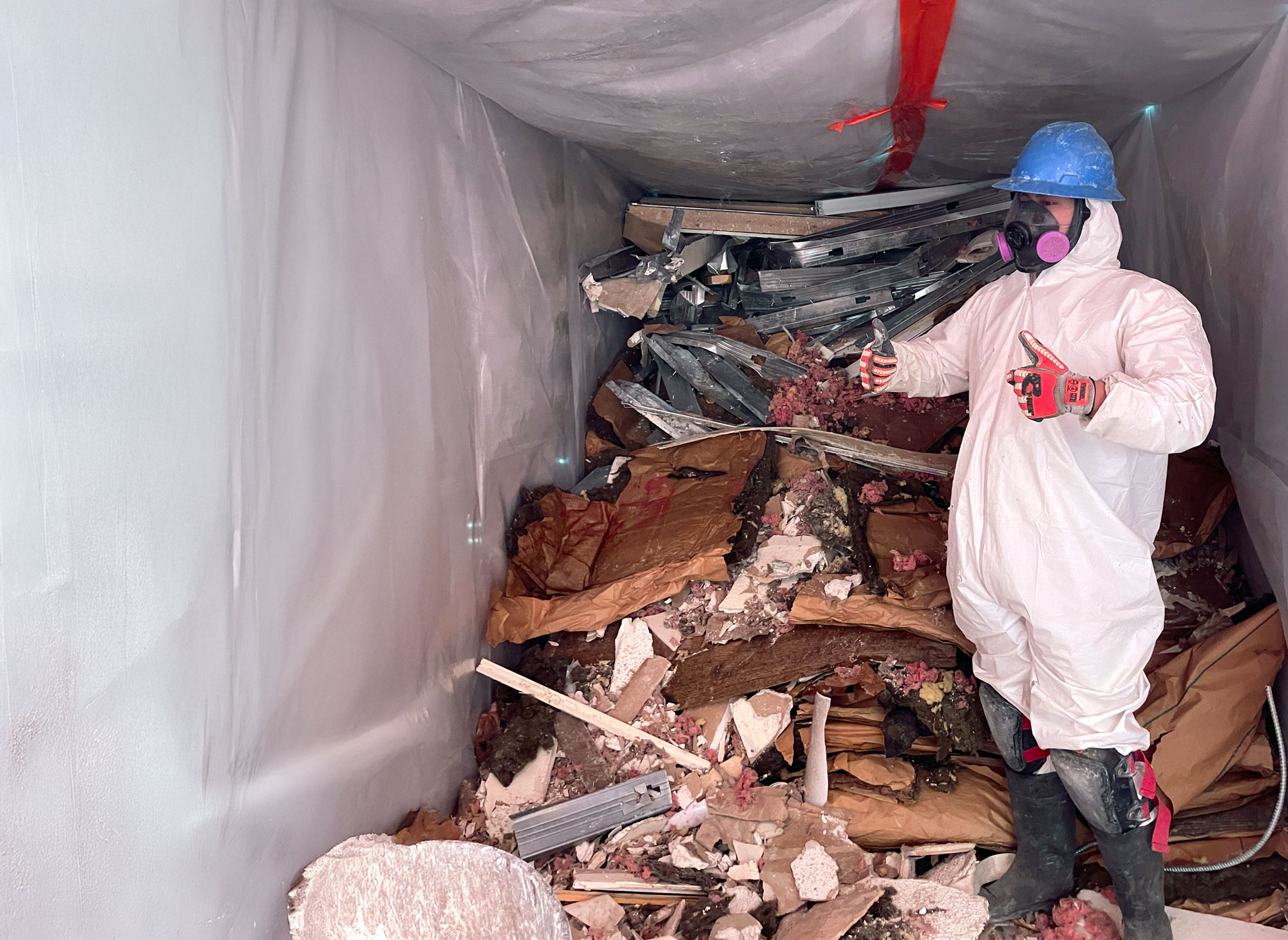
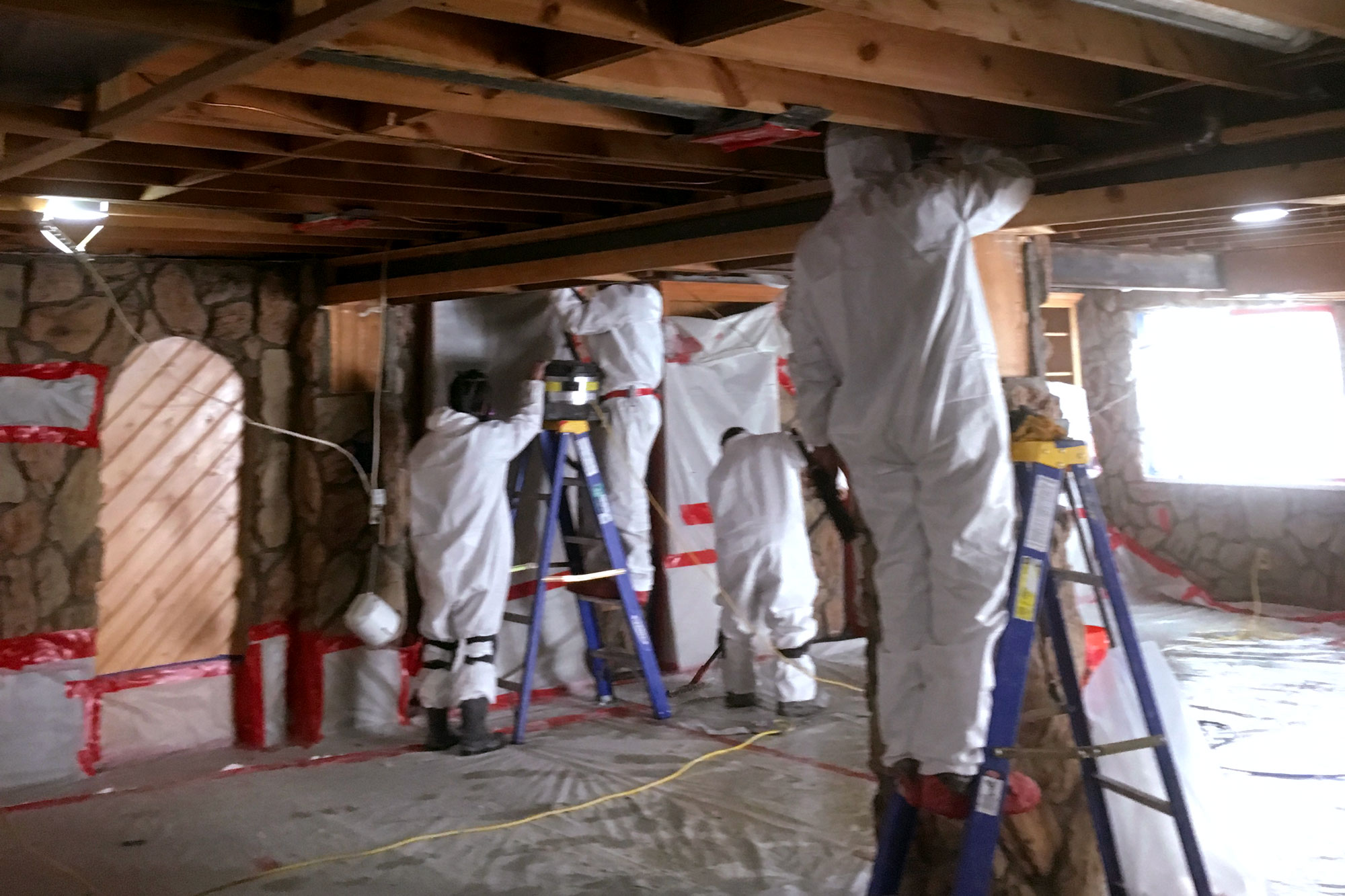
ACES prioritizes higher-complexity water losses tied to contamination, demolition, or rebuild needs. This means our teams carry the certifications, equipment, and project management capability to handle losses that require more than basic mitigation — including asbestos-containing material encounters during demolition.

Phase 2

Phase 2: Structural Drying and Dehumidification

Once standing water is removed, the structural drying phase begins. This is typically the longest phase of mitigation, lasting 3 to 5 days for standard losses but potentially extending to 7 or more days for heavily saturated structures, multi-layer flooring assemblies, or concrete slab drying. ACES monitors every job daily using calibrated moisture meters and psychrometric readings to track progress against IICRC dry standards.

Structural drying equipment in a Denver property

Material Drying Times

Drywall typically reaches dry standard in 3 to 4 days. Hardwood flooring may require 5 to 7 days with careful monitoring to prevent cupping or crowning. Concrete slabs are the slowest — they can hold moisture for weeks and often require specialty equipment like injectidry systems to draw moisture through the slab surface.

Daily Monitoring

ACES technicians track GPP (Grains Per Pound) readings and individual material moisture points every 24 hours. This data is documented in drying logs that your insurance adjuster can reference. Monitoring ensures equipment is adjusted as conditions change and confirms when each area has reached the target dry standard.

Factors That Slow Drying

High ambient humidity — common during Colorado spring storms — reduces evaporation rates. Saturated insulation behind walls acts as a moisture reservoir. Insufficient airflow in enclosed spaces like closets and cabinet cavities can create pockets that resist drying without targeted equipment placement.

Meeting Dry Standards

"Dry" is not a subjective call. ACES follows IICRC S500 standards, which define specific moisture content targets relative to unaffected reference materials in the same structure. Equipment is not removed until every monitored point meets or falls below the established dry goal — protecting you from premature closeout and future mold risk.

Full Timeline

From Emergency Call to Final Walkthrough

The total water damage restoration timeline depends on the severity of the loss, the materials involved, and the reconstruction scope. Here is a typical breakdown for a mid-complexity residential water loss in the Denver metro area.

Day 1: Emergency Response

Water extraction, loss assessment, equipment setup, adjuster notification.

Days 2-5: Structural Drying

Daily monitoring, equipment adjustment, moisture documentation for insurance.

Days 5-7: Demolition & Scope

Selective demo of non-salvageable materials, hazmat testing if needed, rebuild scope finalized.

Weeks 2-4: Reconstruction

Framing, drywall, flooring, paint, fixtures — full restoration to pre-loss condition.

Certifications

EPA Lead-Safe Certified (NAT-F222667)

Federal Readiness

CAGE CODE 62FR3 · DUNS 117517457

Emergency Response

24/7 dispatch for water losses across metro Denver

1 / 1

Client Feedback

What Our Clients Say About ACES

Real feedback from homeowners and property managers after water damage restoration.

FAQ

Water Damage Restoration FAQs

Common questions about restoration timelines, drying, and the recovery process.

How long does it take to dry out water damage?

Average of 3 to 5 days for structural drying Dependent on material type and water volume Requires continuous equipment operation

Can I speed up the drying process?

Do not turn off industrial fans Keep windows closed if using dehumidifiers Maintain consistent indoor temperature (70-80°F)

How soon does mold start growing after a leak?

Within 24 to 48 hours Importance of the first 24 hours for mitigation Why immediate extraction is critical

What is the total water damage restoration timeline?

Mitigation: 1-5 days Reconstruction: 1-3 weeks Total project: 2-4 weeks on average

Does my insurance company set the timeline?

Adjuster approval can take 3-7 days ACES works directly with adjusters to expedite Emergency work usually starts before approval

How long do I have to move out during restoration?

Depends on the location of damage (kitchen/bath) Noise from equipment is a factor Safety concerns with 'Category 3' black water

How long does sewage cleanup take?

More intensive cleaning and sanitizing Often requires 1-2 extra days for antimicrobial treatment Porous materials usually require immediate removal

Why is structural drying taking longer than 5 days?

Trapped moisture in subfloors Multiple layers of flooring Inadequate equipment for the square footage

Still have questions?

We're here to help you find the answers.

Contact Us

Serving the Greater Denver AreaLittleton

Conveniently located for Denver metro area customers

Address

9615 US-85, Unit 29

Littleton, CO 80125

Get Directions

Hours

7:00 AM–8:00 PM, seven days a week

Emergency dispatch is available after hours for urgent loss events.

Contact

(303) 241-1938

Call or text for appointments

Request a Quote
Available Now

Need Emergency Water Damage Help?

ACES responds 24/7 to water losses across metro Denver. Call now or request a qualified restoration estimate.

24/7 Emergency Response
Service-Disabled Veteran-Owned Small Business (SDVOSB)
Colorado-Compliant Abatement